
Department Atomic-Scale Dynamics in Light-Energy Conversion
Beamtimes
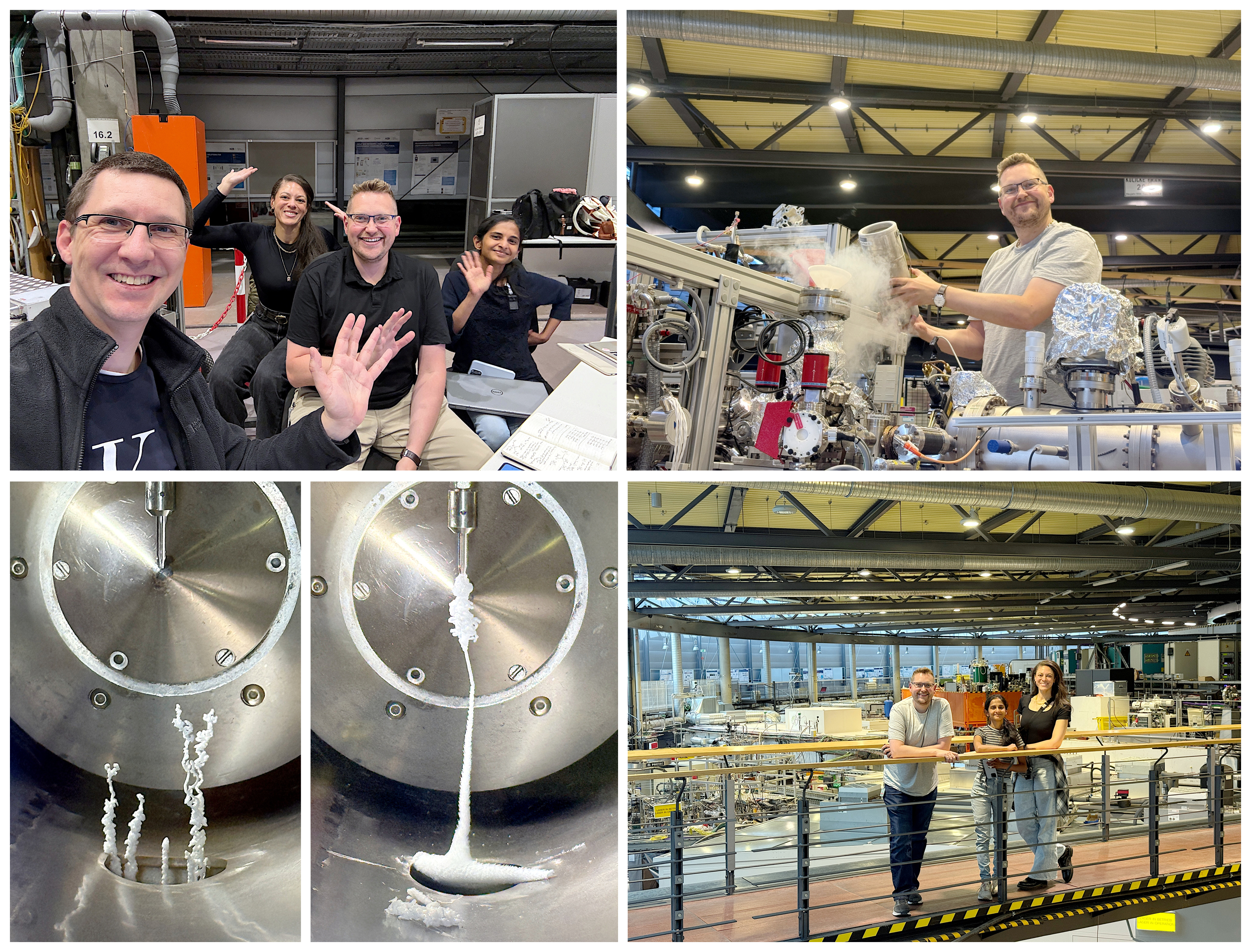
Courtney, Mekha, Jared and Robert are happy during the data collection, despite the permanent growing of ice-needles towards the nozzle. © Robert Seidel
Weeks 17-18 2026 (April 21 – May 03) – Jared Bruce (University of Nevada, Las Vegas)
Proposal no: 261-20394 ST
Jared and his colleagues, Courtney and Mekha, from the University of Nevada, Las Vegas, and Robert set out to investigate the pre-nucleation processes of silver nanoparticles in aqueous solution using the liquid microjet technique. The experimental conditions were particularly challenging, involving low sample concentrations, high temperatures, unknown timescales for nucleation, and a substantial risk of nozzle clogging—which, indeed, turned out to be a recurring issue. Nevertheless, the experiments provided valuable insights into the conditions required for a more successful follow-up beamtime.
As a backup project, we investigated the temperature-dependent dissociation constants of citrate in the presence of various counterions. By measuring the energy separation between the carboxyl and aliphatic signals, we were also able to extract the corresponding thermodynamic quantities, enthalpy and entropy, as a function of probing depth. Fortunately, ice needle formation was almost entirely absent during these measurements, allowing us to collect several excellent datasets.
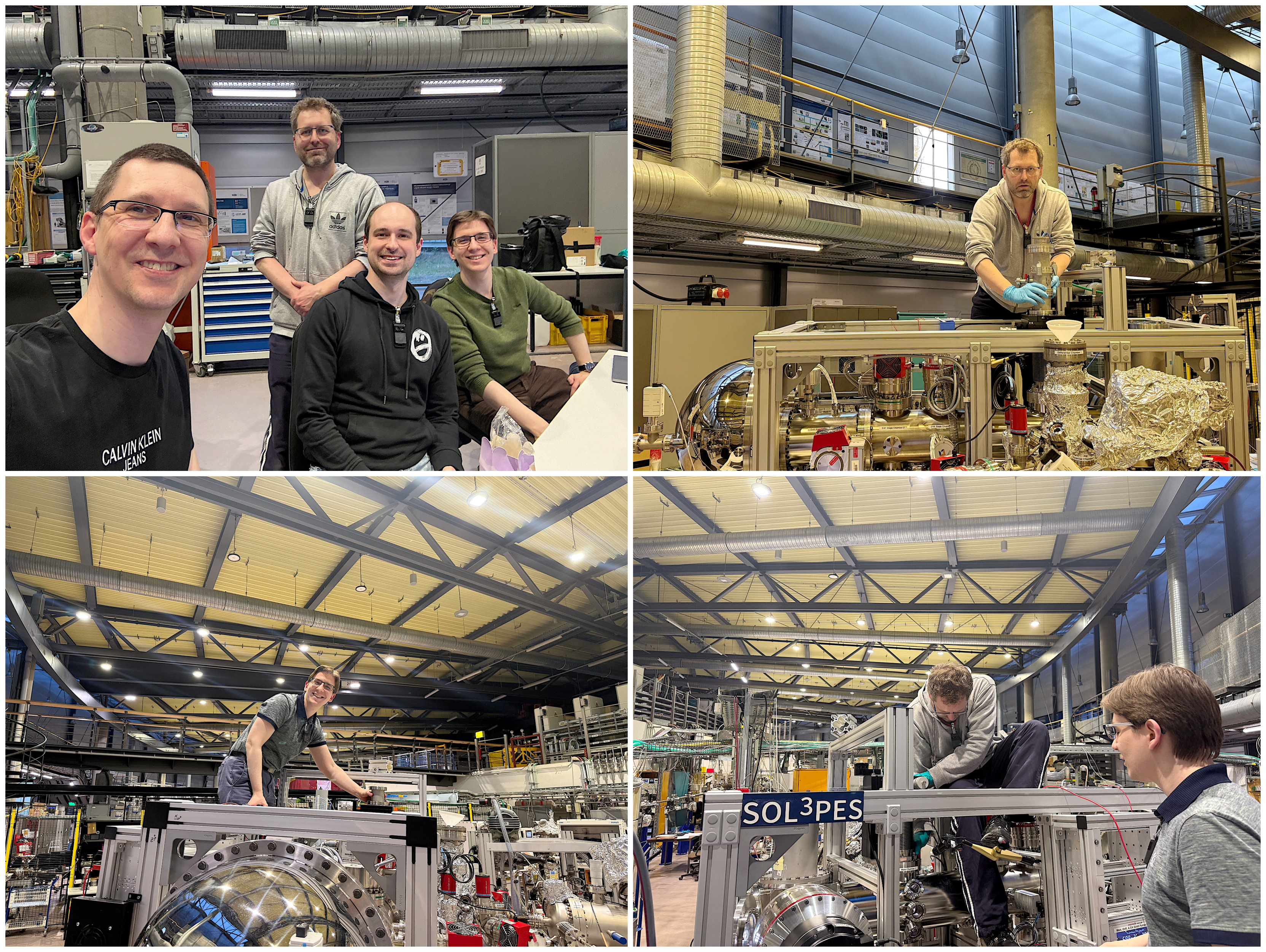
While Lukas, Christian, and Robert are seasoned veterans of synchrotron experiments, theorist Tomislav thoroughly enjoyed his first hands-on experience at a synchrotron—perhaps the beginning of a new career as an experimentalist? Installing the custom-built injection system brought all the way from Prague required considerable effort, but Christian mastered the challenge with his characteristic skill and composure. © Robert Seidel
Week 15 2026 (April 7 – 12) – Lukáš Tomaník (VSCHT Prague)
Proposal no: 261-20363 ST
Lukáš and his colleagues from Prague, Hanns Christian Schewe and Tomislav Rožić, together with Robert from HZB, investigated and compared core-level chemical shifts in acetone and propionaldehyde. The central question was how the C 1s binding energy of the carbonyl carbon differs from that of the aliphatic carbon atoms, and how this shift is influenced by the chemical environment, particularly the solvent.
A second project focused on proton sharing in highly acidic HBF₄ solutions containing water and acetonitrile. We demonstrated that the H₃O⁺-like species formed in these systems can be identified through their characteristic resonant Auger spectra and clearly distinguished from water molecules. Further analysis will reveal whether the experimental data provide convincing evidence of proton sharing.
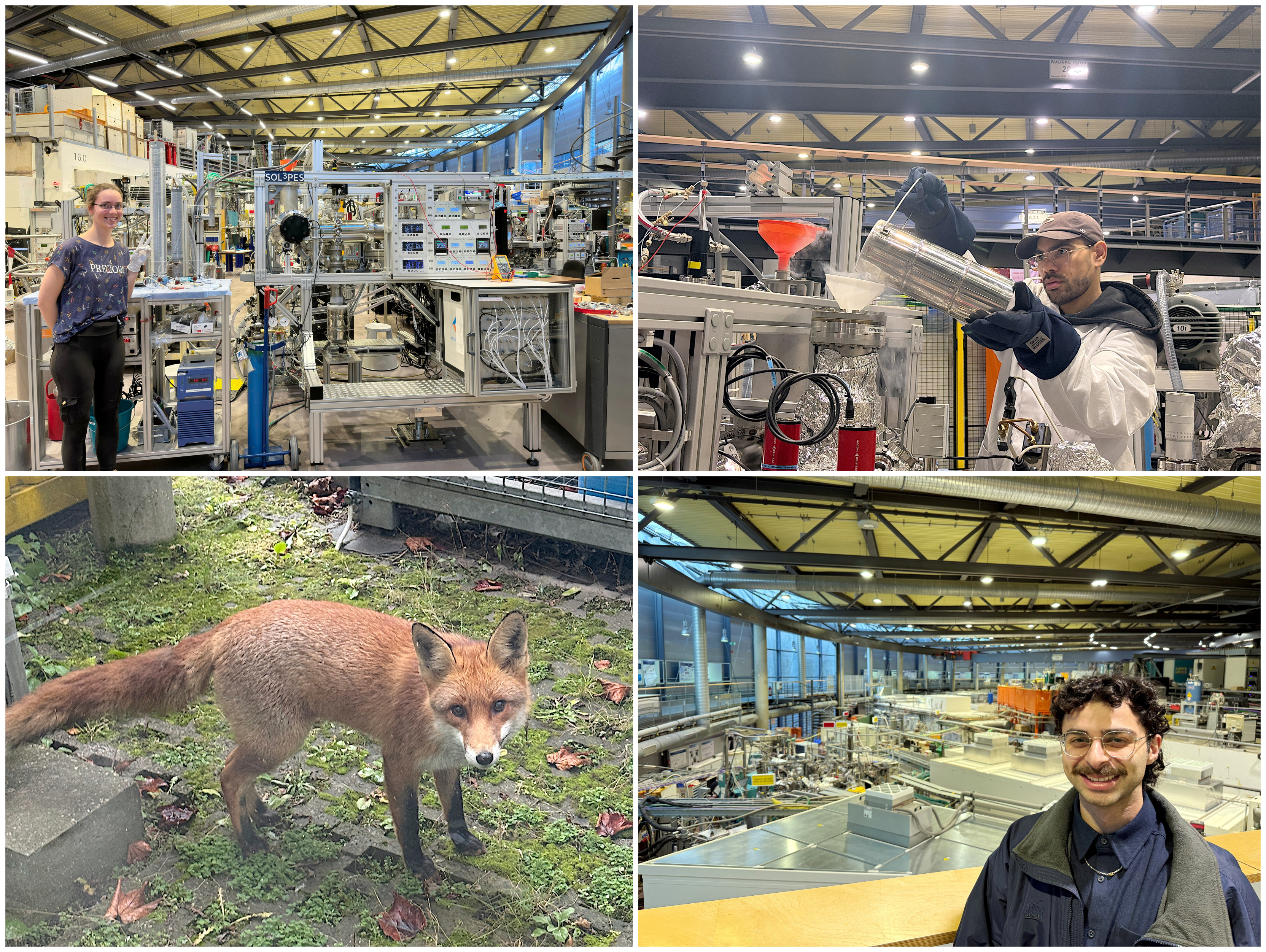
While Fanny and Álvaro were working hard to ensure that the experiment was well prepared and that we could collect all the essential data, we had the pleasure of welcoming two rather different visitors during our beamtime: Patrick Elten, an engineer from Ottawa, Canada, who has recently joined HZB for at least a year. He stopped by to draw inspiration from our setup for the design of a new photoelectron spectroscopy chamber at the Wannsee campus. And a curious fox, who made a surprise appearance just half a meter outside the window of the BESSY building, right next to our experimental station. Two very different visitors, but both made our beamtime a little more memorable! © Robert Seidel
Week 13 2026 (March 24 – 29) – Seidel group (Helmholtz-Zentrum Berlin)
Proposal no: 261-20090 EF part II
We continued our investigations into the dissociation ratio of the CO₃²⁻/HCO₃⁻ system. Furthermore, we successfully performed absolute binding energy calibrations for ten key solvents for the first time and systematically explored solvent and polarity effects on solutes by measuring absolute binding energy shifts using biased liquid microjets.

Steve was in very good hands with the local team, Mayro and Robert. Bernd Winter from the Fritz-Haber-institute in Berlin also visited us several times and provided valuable support during the measurements, as well as with cleaning the vacuum chamber and preparing the cold traps. © Robert Seidel, Stephen Bradforth
Weeks 11-12 2026 (March 10 – 22) – Stephen E. Bradforth (USC Los Angeles)
Proposal no: 261-20333 ST
Stephen Bradforth from the University of Southern California (USC) was awarded two weeks of beamtime to investigate subtle shifts in the absolute binding energies of core and valence orbitals in biologically relevant DNA nucleosides and their derivatives, as well as resonant Auger emission following core excitation at the nitrogen and oxygen K-edges. These highly ambitious measurements are expected to provide new insights into the behavior of core-to-π* excited DNA bases in aqueous solution. This is particularly important because the unoccupied π* orbitals of nucleobases play a key role in the UV absorption of DNA and, consequently, in UV-induced photodamage.
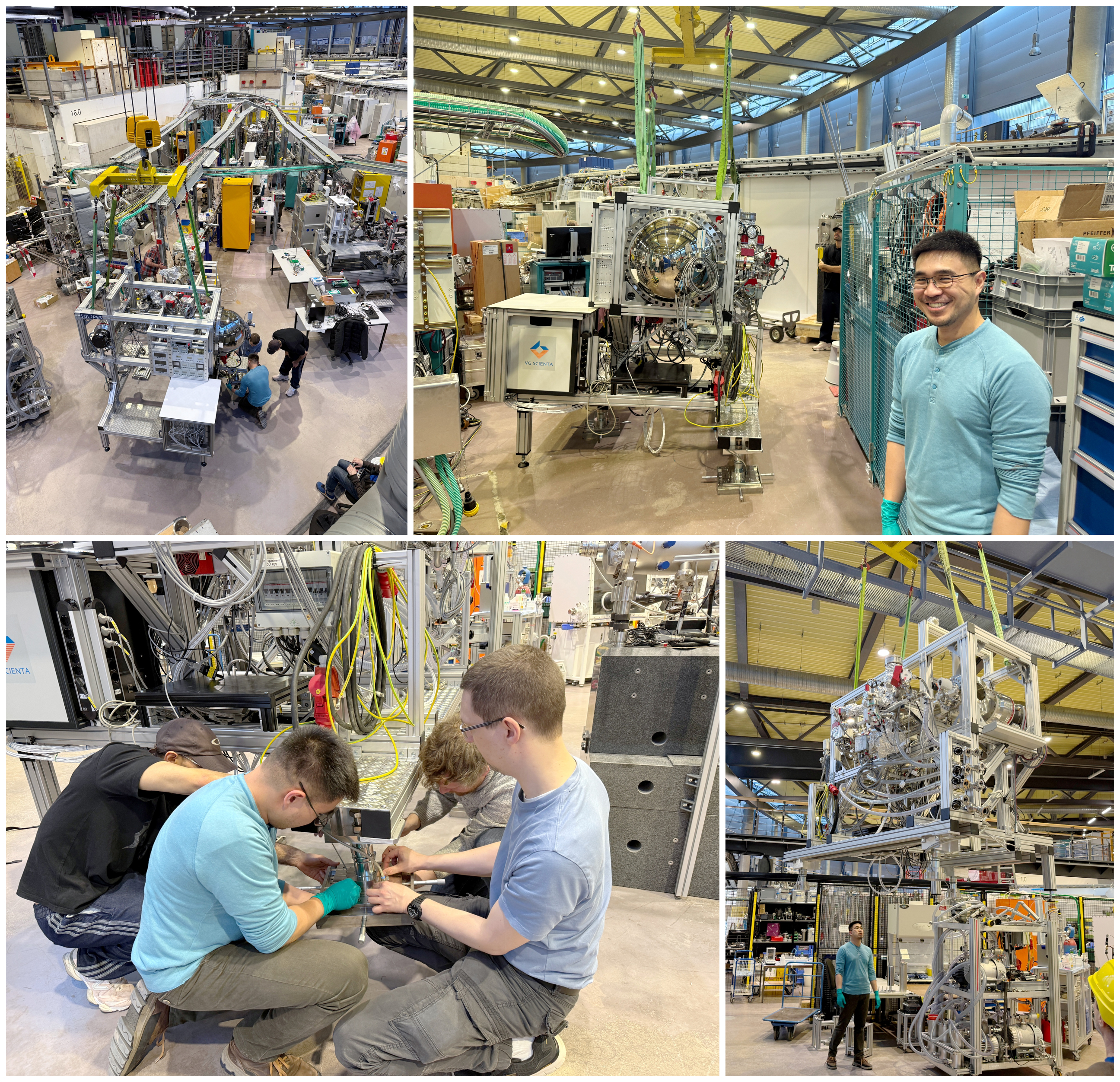
Thanks to Michael Müller from the BESSY II User Service, we used the BESSY overhead crane to maneuver our SOL³PES unit into its final position at the beamline. Mayro was happy at first, then became attentive as the machine was lowered. Together, we then attached the heavy feet to the machine. © Fanny Getzlaff / Robert Seidel @ HZB
Week 10 2026 (March 03 – 08) – Seidel group (Helmholtz-Zentrum Berlin)
Proposal no: 261-20090 EF part I
This was the first official beamtime carried out with our newly upgraded SOL³PES setup. Following the installation and careful alignment of the experimental system, we investigated the electronic structure of CeO₂ nanoparticles suspended in water as a function of stabilizer concentration. We also studied the concentration- and depth-dependent dissociation equilibria between carbonate (CO₃²⁻) and bicarbonate (HCO₃⁻), probing different distances from the liquid surface.